
Quick Answer
Importing dresses from China to the USA in 2026 means paying three layered duties: the standard HTS rate (roughly 8–16% depending on fiber content), Section 301 tariffs, and any additional trade measures in force. The de minimis exemption no longer applies to Chinese goods, so even small parcels are dutiable. Express courier delivers in 5–8 days to most destinations and suits orders under about 100 kg; sea freight takes 30–45 days and only makes sense at volume. You need a commercial invoice, packing list, bill of lading, and FTC-compliant fiber-content and country-of-origin labels on every garment. Budget your true landed cost as unit price + freight + duty + brokerage, not just the wholesale price.
Why 2026 Is a Different Game
If you’re planning to import dresses from China to USA in 2026, this guide walks you through every step — from HTS classification to the final landed cost per unit. The variety, pricing, and fabric innovation make China the logical sourcing choice for most dress boutiques. What you need now is the practical knowledge of how to actually get those dresses from a Chinese factory to your U.S. doorstep — legally, affordably, and without surprises.
In 2026, this process is more complex than it was two years ago. The U.S. tariff landscape has shifted dramatically — the de minimis exemption for Chinese goods has been eliminated, Section 301 tariffs remain layered on top of standard duties, and customs documentation requirements have tightened. If you import dresses from China to USA without understanding these changes, you risk paying 15–40% more than necessary on your landed cost, or worse, having your shipment held at customs.
This guide walks you through every step, from placing your order to receiving your dresses, with the specific numbers and documents you need in 2026.
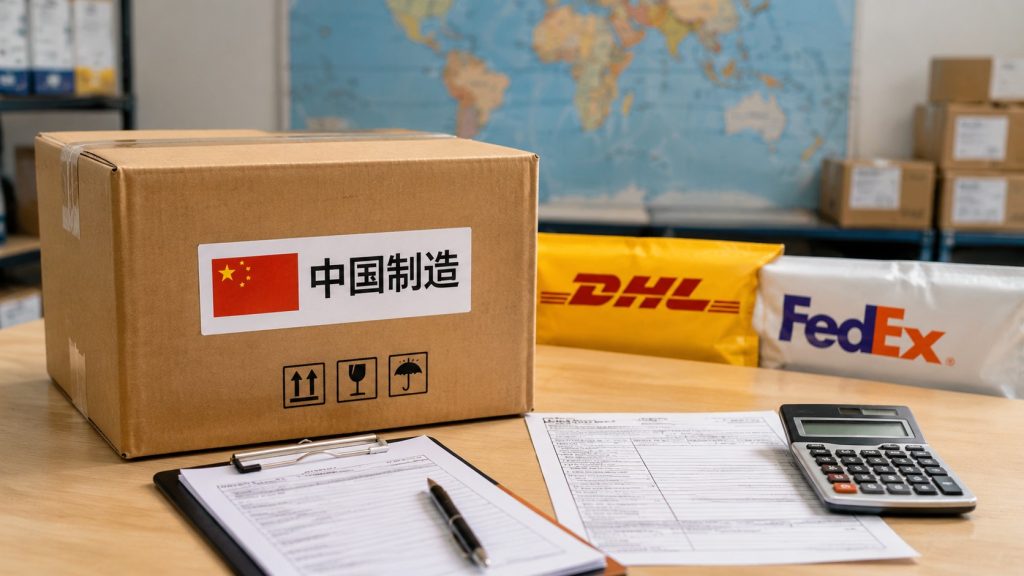
Step 1: Understand What You Are Paying — The U.S. Duty Structure for Dresses
Before you place a single order, you need to understand the full cost of getting dresses into the United States. The wholesale price your supplier quotes is only the beginning.
The Layered Duty System
When you import dresses from China to USA, you pay multiple layers of charges that stack on top of each other. According to the Greenwich Mercantile import duty guide, clothing is classified under HTS Chapters 61 (knitted or crocheted apparel) and 62 (woven apparel), and the base duty rate varies primarily by fiber content:
Layer 1: Base HTS Duty (Standard tariff)
- Cotton dresses: approximately 8–16%
- Synthetic dresses (polyester, nylon, spandex): typically 14–20% for most common knit and woven categories (e.g., HTS 6104.43 for women’s synthetic-fiber knit dresses is ~16%)
- Silk dresses: approximately 3–7%
- Blended fabrics: rate depends on the dominant fiber by weight
The difference between knit and woven classification can create a duty rate difference of 10 percentage points or more. A bandage dress (knitted construction, rayon-nylon-spandex blend) will be classified differently from a woven cotton sundress.
Layer 2: Section 301 Tariff (China-specific) Most clothing falls under List 4A, which carries an additional 7.5% tariff on Chinese-origin goods. This rate has been in place since 2019 and remains effective in 2026.
Layer 3: Other Additional Tariffs The tariff environment has been volatile through 2025–2026. At various points, additional IEEPA-related tariffs and reciprocal tariffs have been imposed, modified, and challenged in court. In February 2026 the U.S. Supreme Court struck down IEEPA-based tariffs. The 10% Section 122 baseline tariff that replaced them expired on July 24, 2026, and a new Section 301 forced-labor tariff of 12.5% on Chinese goods took effect the same day. Check current rates before each order — the landscape can change within weeks.
Where the rates stand now: the 10% Section 122 baseline tariff took effect February 24, 2026 and expired at its 150-day limit on July 24, 2026. USTR replaced it the same day with a Section 301 forced-labor tariff, and China sits in the 12.5% tier. For a typical synthetic knit dress the stack is now roughly 36%: base HTS rate around 16%, plus 7.5% Section 301 (List 4A), plus 12.5%. The new tariff is being challenged in court, so verify current rates at hts.usitc.gov and check the latest CBP guidance before every order.
Layer 4: Processing Fees
- Merchandise Processing Fee (MPF): 0.3464% of shipment value (minimum $33.58, maximum $651.50 for fiscal year 2026, effective October 1, 2025)
- Harbor Maintenance Fee (HMF): 0.125% of shipment value (ocean shipments only)
What This Means for Your Dress Order
Let’s calculate the real landed cost for a typical dress shipment:
| Line Item | Amount |
|---|---|
| Wholesale cost (10 dresses × $22 each) | $220.00 |
| International express shipping (DHL) | $65.00 |
| Customs value (goods only, FOB basis) | $220.00 |
| Base HTS duty (~16% for a synthetic knit dress) | $35.20 |
| Section 301 List 4A tariff (7.5%) | $16.50 |
| Section 301 forced-labor tariff (12.5%, from July 24, 2026) | $27.50 |
| Courier clearance / disbursement fee (typical) | $20.00 |
| Total duties and fees | $99.20 |
| Total landed cost | $384.20 |
| Effective cost per dress | $38.42 |
For the same math at 6, 30 and 100 pieces, including what changes when you ship duty-paid, see our 2026 landed cost guide.
Your $22 wholesale dress just became a $38.42 landed dress — a 75% increase over the wholesale price. This is the number you need to use when calculating your retail price and margins, not the $22.
Important caveat: The tariff rates above reflect the situation as of early 2026, but rates have changed multiple times in 2025–2026. Always verify current rates using the USITC Harmonized Tariff Schedule search tool before placing an order.

Step 2: Find Your HTS Code — The Most Important 10 Digits
Your HTS (Harmonized Tariff Schedule) code determines your duty rate. Getting it wrong can mean the difference between 8% and 32% duty — or trigger a customs audit and penalties.
For dresses, the two main chapters are:
- Chapter 61: Knitted or crocheted apparel (bandage dresses, jersey dresses, bodycon dresses, stretch-knit dresses)
- Chapter 62: Woven apparel (cotton sundresses, linen dresses, woven polyester dresses)
Within each chapter, the rate depends on:
- Fiber content — cotton vs synthetic vs silk vs blend
- Gender — women’s vs girls’ (different subheadings)
- Construction details — specific garment types have their own codes
Common HTS Codes for Wholesale Dresses
| Dress Type | Likely HTS Chapter | Base Duty Range |
|---|---|---|
| Bandage dress (knit, polyester-nylon-spandex) | 6104 | 12–15% |
| Bodycon dress (knit, polyester-spandex) | 6104 | 14–32% |
| Jersey cotton dress (knit) | 6104 | 8–12% |
| Woven polyester dress | 6204 | 12–16% |
| Cotton sundress (woven) | 6204 | 8–12% |
| Sequin dress (varies by base fabric) | 6104 or 6204 | 12–32% |
| Satin dress (woven) | 6204 | 3–7% (if silk) or 12–16% (if polyester) |
How to find your exact code:
- Go to hts.usitc.gov
- Search for “women’s dresses knitted” or “women’s dresses woven”
- Drill down by fiber content
- Identify the 10-digit code
Or let your customs broker do it. For your first few shipments, this is money well spent (see Step 5).
Step 3: Choose Your Shipping Method
You have two main options for getting dresses from China to the U.S.:
Option A: Express Courier (DHL, FedEx, UPS)
Best for: Orders under 100 kg / $5,000 value Transit time: 8–12 business days door-to-door Cost: $6–$12 per kg (roughly $3–$8 per dress depending on weight) Customs: The courier handles customs clearance for you (built into the service) Duties: Collected by the courier and billed to you upon delivery or shortly after
Pros: Fast, simple, door-to-door, courier handles paperwork. Ideal for small boutique orders. Cons: More expensive per unit than sea freight. Less control over customs classification (the courier assigns HTS codes, and they may not optimize for the lowest legal rate).
Option B: Sea Freight (Ocean Shipping)
Best for: Orders over 100 kg / $5,000 value / large volume Transit time: 25–40 days port-to-port + 3–10 days customs clearance + inland delivery Cost: $2–$5 per kg (roughly $1–$3 per dress) Customs: You (or your customs broker) handle clearance at the port Duties: Paid at the time of customs clearance
Pros: Much cheaper per unit at volume. You control HTS classification. Cons: Slow. Requires a customs broker. More paperwork. Risk of port delays and demurrage charges.
Which Should You Choose?
| Factor | Express | Sea Freight |
|---|---|---|
| Order size | Under 100 kg | Over 100 kg |
| Speed needed | Yes | Can wait 30–45 days |
| Budget priority | Speed over cost | Cost over speed |
| Experience level | Beginner-friendly | Needs customs broker |
| Customs complexity | Courier handles it | You manage it |
For most small boutiques ordering 50–200 dresses at a time, express shipping is the right choice. The per-unit cost difference versus sea freight is $3–$5 per dress, but you save 3–5 weeks and avoid the complexity of port clearance. Sea freight makes sense when you are ordering 500+ dresses per shipment and can plan 6–8 weeks ahead.
Step 4: Prepare Your Documents
Whether you ship express or sea freight, you need these documents for every import:
Required Documents (You Cannot Ship Without These)
1. Commercial Invoice Issued by your Chinese supplier. Must include: seller and buyer details, product description, quantity, unit price, total value, currency, Incoterms (FOB, DDP, etc.), and country of origin (“China” or “People’s Republic of China”).
2. Packing List Details every carton in the shipment: carton number, contents, gross weight, net weight, and dimensions.
3. Bill of Lading (sea) or Air Waybill (express) Your proof of shipment. The courier provides the air waybill automatically for express shipments.
4. CBP Entry Summary (Form 7501) Filed by your customs broker (or the courier for express shipments). This is the official customs declaration.
Required for Apparel Specifically
5. Fiber Content and Country of Origin Labels U.S. FTC (Federal Trade Commission) requires that every garment sold in the U.S. has a permanent label stating: fiber content (e.g., “90% Rayon, 9% Nylon, 1% Spandex”), country of origin (“Made in China”), care instructions (wash symbols or text), and manufacturer/importer identification (your company name or RN number).
Your Chinese supplier must attach these labels before shipping. If they arrive without proper labels, you cannot legally sell them in the U.S. Confirm labeling requirements with your supplier before production. This is one of the most common mistakes first-time importers make.
6. ISF Filing (10+2) — Ocean Shipments Only The Importer Security Filing must be submitted to CBP at least 24 hours before cargo is loaded onto a vessel. Your customs broker or freight forwarder handles this. Late filing incurs a $5,000 penalty per violation.
Step 5: Decide Whether You Need a Customs Broker
A customs broker is a licensed professional who files your customs paperwork with CBP on your behalf. They classify your goods, calculate duties, submit entry documents, and resolve any holds or inspections.
When you DO need a customs broker:
- Sea freight shipments (almost always)
- Shipments valued over $2,500
- If you are unsure about HTS classification
- If your shipment includes multiple product types with different duty rates
- First-time importers who want to avoid costly mistakes
When you might NOT need one:
- Express courier shipments (DHL/FedEx/UPS handle customs as part of the service)
- Very small shipments where the courier’s automated classification is acceptable
What a customs broker costs:
- Per-entry fee: $100–$250 per shipment
- Some brokers charge additional fees for HTS classification research ($50–$150)
- ISF filing (ocean): $25–$75
For small boutiques using express shipping, you probably do not need a separate customs broker. The courier’s customs clearance service is included in the shipping fee. However, if you are importing high volumes or want to optimize your duty rates, a broker can often save you more in duty reduction than they charge in fees.
Step 6: The Practical Workflow to Import Dresses from China to USA
Here is the actual sequence of events when you import dresses from China to USA:
Week 1: Order and Confirm
- Select styles from your supplier’s catalog or send custom specifications
- Confirm pricing, sizes, quantities, and delivery terms
- Confirm labeling requirements (FTC labels, care instructions, country of origin)
- Make payment (typically 30–100% upfront via PayPal, Wise, or bank wire)
Week 2–3: Production and Quality Check
- Supplier produces or pulls your order from stock
- Supplier sends pre-shipment photos for your approval
- Quality inspection (your supplier’s QC, or a third-party inspector you hire)
- Approve for shipping or request corrections
Week 3–4: Shipping (Express)
- Supplier books DHL/FedEx/UPS pickup
- You receive tracking number
- Shipment clears Chinese export customs (automated, usually same day)
- In transit: 3–5 days air transport
Week 4–5: Arrival and Clearance
- Courier files customs entry with CBP on your behalf
- CBP reviews and releases (usually same day for express)
- Courier delivers to your door
- You receive a duty bill from the courier (payable within 30 days)
Week 5+: Sell
- Photograph inventory
- List on your website and social media
- Fulfill customer orders
Total timeline from order to selling: 3–5 weeks for express shipping. 6–10 weeks for sea freight.
Step 7: Manage Your Landed Cost — 5 Strategies to Pay Less
You cannot avoid duties, but you can minimize your total landed cost:
Strategy 1: Consolidate Shipments
Shipping 10 dresses costs almost the same in courier fees as shipping 50. The per-unit shipping cost drops dramatically when you consolidate into fewer, larger shipments. Instead of ordering 10 dresses every week, order 40–50 dresses once a month.
Strategy 2: Get Your HTS Classification Right
The difference between a cotton dress (8% base duty) and a polyester dress (up to 32% base duty) is enormous. If your dresses are cotton-blend, ensure the classification reflects the cotton content — this can save 10–20 percentage points in base duty. A customs broker can review your classifications for $50–$150, which pays for itself on the first order.
Strategy 3: Know What Customs Actually Values
US duty is calculated on the value of the goods, not on international freight, so your shipping cost is not dutiable either way. What matters is that the declared value is accurate and the quote is transparent. Ask your supplier to show duty as its own line: whether they quote FOB and you settle duty yourself, or quote DDP with duty included, you should be able to see how the number was reached.
Strategy 4: Source Fiber Content Strategically
Since duty rates vary by fiber content, understanding which fibers carry lower duties can inform your sourcing decisions. Cotton and silk generally carry lower base duties than most synthetic fabrics — a cotton knit dress can be several percentage points cheaper in duty than a comparable polyester knit dress. A rayon-dominant blend may also carry a slightly different rate than a polyester-dominant blend, even in similar-looking dresses.
Strategy 5: Work With a Knowledgeable Supplier
A supplier experienced in exporting to the U.S. will provide accurate commercial invoices with correct product descriptions, fiber content, and HS codes. This reduces the risk of customs delays, reclassification, and unexpected duty bills. If your supplier regularly exports to the U.S. and can provide proper documentation, your clearance process will be smoother and faster. This is one area where working with a China-based sourcing partner that understands U.S. import requirements can save you significant time and money.
Common Mistakes First-Time Dress Importers Make
Mistake 1: Not budgeting for duties
Your wholesale price is not your cost. Add 30–50% to your wholesale cost to estimate your real landed cost. If you price your retail based on wholesale-only math, your margins will be far thinner than you expect.
Mistake 2: Missing FTC labeling requirements
Every dress sold in the U.S. must have fiber content, country of origin, care instructions, and manufacturer ID on a permanent label. If your dresses arrive without these labels, you cannot legally sell them. Confirm with your supplier before production.
Mistake 3: Using the wrong HTS code
An incorrect HTS code can mean overpaying duties (money wasted) or underpaying duties (penalties when CBP catches it — and they do catch it). Get professional classification help for your first shipment.
Mistake 4: Ordering too much on the first shipment
Your first import order is a learning exercise, not an inventory-building event. Order a small test batch (20–40 dresses) to evaluate quality, understand the import process, and calculate your actual landed cost. Scale up on subsequent orders once you know what works.
Mistake 5: Not having a return/defect plan
What happens when 5 of your 50 dresses have stitching defects? Returning goods to China is expensive and slow. Negotiate a refund or credit policy with your supplier before your first order. Most reputable suppliers will offer a credit or replacement on defective items — but only if you document the issues with photos and report them within an agreed timeframe.
The Post-De-Minimis Reality: What Changed and What It Means
The $800 de minimis exemption for Chinese and Hong Kong goods was eliminated on May 2, 2025, and later extended to all other countries on August 29, 2025. This is the single biggest change for small dress importers, and here is what it means in practice:
Before: You could ship a $200 package of dresses from China and it would clear customs duty-free, with minimal paperwork. Many small boutiques relied on this to test inventory in tiny batches.
Now: Every single shipment from China — regardless of value — requires formal customs entry, HTS classification, and full duty payment. A $50 dress shipment now goes through the same customs process as a $50,000 container.
What this means for your strategy:
- Stop dropshipping individual pieces from China. Duty plus a clearance fee on every single parcel makes piece-by-piece imports uneconomical.
- Consolidate into larger orders. Clearance costs are charged per entry, not per item, so one 50-dress shipment clears far more cheaply per dress than five 10-dress shipments. Note that shipments valued over $2,500 require a formal entry, where the Merchandise Processing Fee minimum of $33.58 applies.
- Budget for duties on every order. There are no more duty-free shortcuts.
- Work with suppliers who handle commercial documentation professionally. The supplier who previously shipped your dresses as “gift — value $10” is now a liability, not a partner.
A low-MOQ supplier that lets you consolidate 6+ pieces across multiple styles into a single shipment is the right model for post-de-minimis importing — you get variety and test capability without the per-shipment overhead of multiple tiny imports.
Frequently Asked Questions
No general import license is required. However, you need a business registration (LLC or sole proprietorship), an EIN (Employer Identification Number) from the IRS, and a customs bond (typically purchased through your customs broker) if your shipment value exceeds $2,500. For express courier shipments under $2,500, the courier’s bond covers your entry. You do not need an import-specific license, but your dresses must comply with FTC labeling requirements (fiber content, country of origin, care instructions) to be legally sold in the U.S.
Total duty depends on the dress type, fiber content, and applicable tariff programs. As of early 2026, the combined rate typically ranges from 25% to 50% of customs value for most dress categories, including base HTS duty (8–32%), Section 301 tariff (7.5%), and other applicable tariffs. The exact rate depends on your dress’s 10-digit HTS classification. Use the USITC search tool at hts.usitc.gov to find rates for your specific product, and check current additional tariff programs as these have changed multiple times in 2025–2026.
For most small boutiques ordering 50–200 dresses, express shipping (DHL, FedEx, UPS) is the better choice. It delivers in 5–8 days, the courier handles customs clearance, and the per-unit cost difference versus sea freight is only $3–$5 per dress. Sea freight makes financial sense for larger orders (500+ dresses) where you can plan 6–8 weeks ahead, but it requires a customs broker and adds complexity. The speed advantage of express shipping also lets you test and reorder faster, which is more important for a small boutique than saving a few dollars per unit.
The FTC requires four elements on a permanent label attached to every garment: fiber content by percentage (e.g., “90% Rayon, 9% Nylon, 1% Spandex”), country of origin (“Made in China”), care instructions (either symbols or written instructions), and manufacturer or importer identification (your company name or registered RN number). These labels must be in English and permanently attached (not removable hang tags). Confirm labeling with your Chinese supplier before production — adding labels after arrival in the U.S. is expensive and time-consuming.
Technically yes, but it is no longer economical. Since the de minimis exemption ended for China on May 2, 2025 (and for all other countries on August 29, 2025), every individual package from China requires formal customs entry and full duty payment. The minimum Merchandise Processing Fee alone is $33.58 per entry — on a $20 dress, that is a 168% surcharge just for the customs fee. For small quantities, consolidating multiple dresses into a single shipment through a low-MOQ supplier (minimum 6 pieces per order) is far more cost-effective than individual dropship parcels.
Total timeline from placing your order to receiving dresses is 3–5 weeks for express shipping (1–2 weeks for production or picking from stock, plus 5–8 days transit, plus 1–2 days customs clearance). Sea freight adds significantly more time: 25–40 days ocean transit plus 3–10 days port clearance plus inland delivery. For boutiques doing regular restocking, express shipping allows a monthly reorder cycle that keeps your inventory fresh without tying up capital in slow-moving ocean shipments.
Final Verdict: Your Import Checklist
If you are ready to import dresses from China to USA in 2026, here is your action checklist:
Before your first order:
- ✅ Register your business (LLC recommended)
- ✅ Get an EIN from the IRS
- ✅ Open a business bank account
- ✅ Research your HTS codes for the dress types you plan to import
- ✅ Calculate your estimated landed cost (wholesale + shipping + all duties)
- ✅ Find a reliable supplier — see our best wholesale clothing suppliers guide
When placing your order:
- ✅ Confirm FTC labeling requirements with your supplier
- ✅ Agree on payment terms and Incoterms (FOB recommended)
- ✅ Request pre-shipment photos for quality verification
- ✅ Start small — 20–40 dresses for your first test order
When your shipment arrives:
- ✅ Inspect every piece upon delivery
- ✅ Document any defects with photos within 48 hours
- ✅ Pay your duty bill from the courier within the stated timeframe
- ✅ Calculate your actual landed cost per dress and compare to your estimate
After your first order:
- ✅ Adjust your retail pricing based on actual (not estimated) landed costs
- ✅ Decide which styles to reorder and which to cut
- ✅ Place your second order — bigger, smarter, and based on real data
The first import is always the hardest. By your third order, the process will feel routine. The key is to start small, learn the system, and scale based on experience rather than assumptions.
For deeper guidance on each part of the sourcing and import process:
- Where to Buy Wholesale Dresses: China vs Turkey vs India — choosing the right country
- Do You Need a China Dress Sourcing Agent? — choosing the right partner
- Wholesale Dress Profit Margins: Real Numbers — pricing for profitability after duties
- How Much to Start a Dress Boutique — budgeting your entire startup