
Quick Answer
Buying a $28 wholesale dress from China and shipping it duty-paid to the US costs roughly $44–$49 per dress landed in September 2026, depending on order size. The biggest add-on is not shipping but import duty (about 36% in the US), and duty does not get cheaper per piece when you order more. Below: full math for 6, 30 and 100 pieces, why a duty-paid (DDP) quote protects you, market notes, and a formula you can reuse.
Last updated: September 2026
The price on a supplier’s list is never the price you pay. Between the factory in China and the rail in your boutique, every dress picks up shipping, import duty, clearance fees and sometimes tax. For US buyers in 2026, those extras can add 55–75% to the unit price.
This guide shows the full math with real numbers: three order sizes (6, 30 and 100 pieces), why a duty-paid (DDP) quote matters, and what to watch for in the US, EU/UK, Middle East and Australia. At the end there’s a simple formula you can reuse for any quote.
The Short Answer
Landed cost = product cost + shipping + import duty + clearance fees (+ import tax, if you can’t reclaim it)
For a US boutique buying dresses at $28 each in September 2026, our worked example lands at roughly $44–$49 per dress, duty paid, depending on order size. The biggest single add-on isn’t shipping. It’s duty, and duty doesn’t get cheaper per piece when you order more.
The Five Parts of Landed Cost
1. Product cost. The unit price times quantity. At Winsome, wholesale prices run $18–$38 per piece, and you can mix any styles, colors and sizes from 6 pieces.
2. Shipping. For small wholesale orders, express couriers (DHL, FedEx, UPS) are usually the practical choice. Cost is charged per kilogram (or by volumetric weight, whichever is higher), and the per-kilo rate drops as the parcel gets heavier. A packed dress in a regular style weighs roughly 0.4–0.7 kg; embellished or heavier styles weigh more.
3. Import duty. A percentage of the goods’ value, set by your country and the product’s tariff code (HS code). Fiber content matters: a polyester-spandex knit dress and a cotton woven dress can fall under different codes with different rates.
4. Clearance and brokerage fees. The courier charges a fee for clearing the parcel through customs and handling the duty payment. Larger shipments may need a formal customs entry and a licensed broker. On a duty-paid quote, these are included.
5. Import VAT/GST. In the EU, UK, Australia and the Gulf, import VAT or GST also applies. If your business is registered for VAT/GST, you can usually reclaim it, which makes it a cash-flow cost rather than a true cost. The US has no import VAT.
Worked Example: A US Boutique, Three Order Sizes (Duty Paid)
Assumptions:
- Average unit price: $28 per dress (mid-range of $18–$38)
- Garment: polyester-blend knit dress
- US duty: about 36% of the goods’ value (base rate ~16% + 7.5% Section 301 + 12.5% Section 301, as of September 2026)
- Packed weight: about 0.55 kg per dress (regular styles run 0.4–0.7 kg packed)
- Quoted duty-paid (DDP): duty and clearance are prepaid, nothing to pay on delivery
- Shipping is based on typical 2026 express rates to the US; clearance fees are estimates. Actual quotes vary by address, parcel size and carrier.
| 6 pieces | 30 pieces | 100 pieces | |
|---|---|---|---|
| Product cost | $168 | $840 | $2,800 |
| Shipping (typical express rate) | ~$45 | ~$165 | ~$460 |
| US duty (~36% of goods value, prepaid) | $60.48 | $302.40 | $1,008 |
| Clearance / brokerage (estimate) | ~$20 | ~$30 | ~$150 |
| Total landed cost | ~$293 | ~$1,337 | ~$4,418 |
| Landed cost per dress | ~$48.91 | ~$44.58 | ~$44.18 |
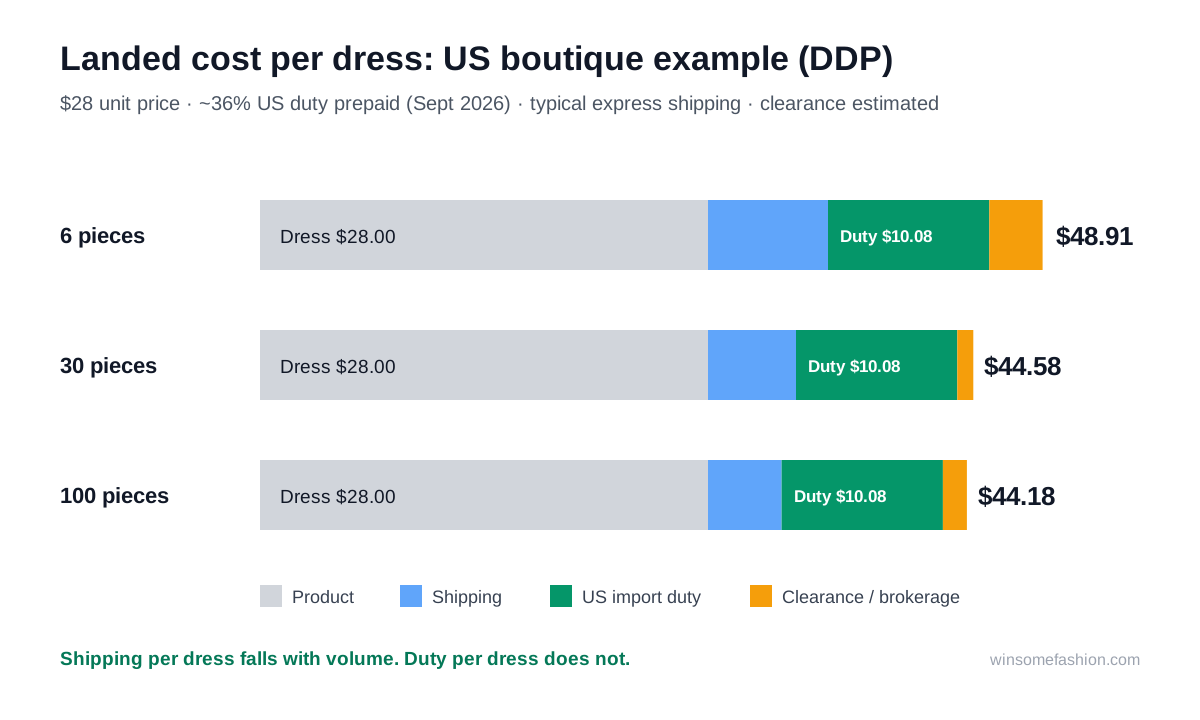
Three Things This Table Shows
Shipping per piece falls with volume. It drops from about $7.50 per dress at 6 pieces to about $4.60 at 100.
Duty per piece doesn’t move at all. It’s a percentage of value, so it’s about $10.08 per dress whether you order 6 or 600. In the US right now, duty is the largest cost you add on top of the product.
Crossing $2,500 changes clearance. US shipments valued over $2,500 need a formal customs entry, which usually means a broker and a merchandise processing fee. That’s why the 100-piece order saves less than 50 cents per dress over the 30-piece order in our example. If you’re planning an order just over $2,500, ask us to quote it both ways. Sometimes splitting it, or staying just under, is cheaper.
What This Means for Pricing
At a landed cost of about $44–$49, a boutique that wants to double its money needs a retail price of roughly $90–$100. A dress that looks cheap at $28 on a list may only work in your store if your customers pay that. We cover this in detail in our wholesale dress profit margins guide.
Why We Quote Duty-Paid (DDP)
Every number in the example above is DDP (Delivered Duty Paid). The price you pay upfront already covers the dresses, express shipping, import duty and customs clearance. When the parcel arrives, there’s nothing left to pay.

We work this way for a practical reason. When duty is left for the buyer to pay on delivery, parcels get held at customs whenever the bill comes as a surprise. If it isn’t paid, the parcel is sent back, and the shipping is lost in both directions. On a small boutique order, that can wipe out the profit of the whole shipment.
A duty-paid quote removes that risk. You know your full cost before you pay, customs clears the parcel, and it goes straight to your door. It also makes pricing simple: your landed cost is the quote total plus any payment fees, divided by the number of pieces.
If you’re comparing suppliers, check whether each quote is duty-paid. A lower price that leaves duty to be paid on delivery isn’t cheaper once you add 36% at the door. We quote duty-paid wherever the destination allows it.
What to Watch for in Your Market
United States. Duty on Chinese apparel is currently around 36% for a typical synthetic knit dress, and the de minimis duty exemption no longer applies to Chinese goods. Rates have changed several times since 2025 and may change again, so check the current rate for your HS code before large orders. For customs bonds, broker selection and paperwork, see our guide on how to import dresses from China to the USA.
EU and UK. Standard duty on most dresses is around 12%, plus import VAT (around 20%, varying by country). The EU’s new €3 flat duty on parcels under €150 mainly targets e-commerce parcels sent directly to consumers. A typical 6-piece wholesale order is already above that threshold, so normal duty applies.
Middle East. Gulf countries apply a common customs duty of around 5%, plus VAT (5% in the UAE, 15% in Saudi Arabia). Low-value thresholds and courier clearance practices differ between countries, so ask for a per-destination estimate.
Australia. Low-value shipments (generally up to AUD 1,000) usually clear without border duty or GST collection. Above that, 10% GST applies, and duty depends on whether the goods qualify under the China–Australia free trade agreement. Ask your supplier upfront whether they can provide a certificate of origin.
The Costs People Forget
- Payment fees. PayPal and card payments can add 3–5%. Bank transfer (T/T) and Wise are usually cheaper for larger orders.
- Remote-area surcharges. Couriers add a fee for addresses outside main delivery zones.
- Volumetric weight. Bulky packaging is billed as if it were heavier. Folded dresses in poly bags are efficient; boxed items aren’t.
- Currency conversion. Your bank’s exchange rate can add another 1–3%.
- Defects. Budget a small allowance for pieces you can’t sell at full price. At Winsome, defective pieces reported with photos within 7 days of delivery are compensated or replaced.
Don’t Try to Save on Duty by Under-Declaring
Some buyers ask suppliers to mark a lower value on the invoice. It’s tempting when duty is 36%, but it’s customs fraud. If customs catches it, you can face penalties, seized goods and closer inspection of every future shipment. A supplier willing to falsify paperwork for you is also a supplier willing to cut corners elsewhere. We declare the real value.
Reuse This Formula for Any Quote
Copy this into a spreadsheet and fill in your numbers:
| Line | Formula |
|---|---|
| A. Product cost | Unit price × quantity |
| B. Shipping | From supplier’s quote |
| C. Duty | A × your duty rate (check your HS code) |
| D. Clearance / brokerage | Ask your courier or broker |
| E. Import VAT/GST (if not reclaimable) | (A + B + C) × VAT rate* |
| F. Payment and FX fees | A × ~3–5% |
| Total landed cost | A + B + C + D + E + F |
| Landed cost per piece | Total ÷ quantity |
| Minimum retail price (2× markup) | Per-piece landed cost × 2 |
The VAT base varies by country. In the EU and UK it’s generally the goods value plus shipping plus duty.
On a duty-paid quote from us, lines B, C and D are already included in the total, so you can compare it directly with your own estimate.
A Cheaper Way to Test the Math
Every number in this article becomes real once you receive a parcel. The lowest-risk way to learn your true landed cost is a small order. With a 6-piece mix-and-match minimum, you can test styles, sizes and the full cost of getting goods to your door before committing to volume. Orders ship 2–3 business days after payment, and we confirm transit time for your destination when we quote.
For more on shipping, customs and payment terms, see our wholesale dress FAQ. If you’re still building your startup budget, our guide on how much it costs to start a dress boutique covers the rest.
Not sure what your landed cost would be? Send us your destination, rough quantity and target retail price, and we’ll give you an honest duty-paid estimate, so you know the full cost before you order.
Frequently Asked Questions
Landed cost is the total cost of getting a dress into your store: the wholesale price plus shipping, import duty, customs clearance fees and any import VAT or GST you cannot reclaim. Divide the total by the number of pieces to get your landed cost per dress, which is the number to base your retail price on.
As of September 2026, a typical polyester-blend knit dress from China pays roughly 36% US duty: a base rate of about 16% plus 7.5% and 12.5% Section 301 tariffs. The exact rate depends on the HS code and fiber content, and rates have changed several times since 2025, so check the current rate before large orders.
DDP (Delivered Duty Paid) means the price you pay upfront already includes shipping, import duty and customs clearance, so there is nothing to pay when the parcel arrives. It prevents parcels from being held or returned over unpaid duty and gives you a fixed landed cost to price around. Winsome Fashion quotes duty-paid wherever the destination allows it.
Partly. Shipping per piece falls as order weight increases, but duty is a percentage of value, so it stays the same per dress at any quantity. In the US, orders valued over $2,500 also need a formal customs entry, which raises clearance costs.
At Winsome Fashion, orders are dispatched 2–3 business days after payment. Transit time depends on your destination and the available carrier, so we confirm it for your country when we send your quote.